Material as Epistemology: ZT Tosha and the Beuysian Inheritance
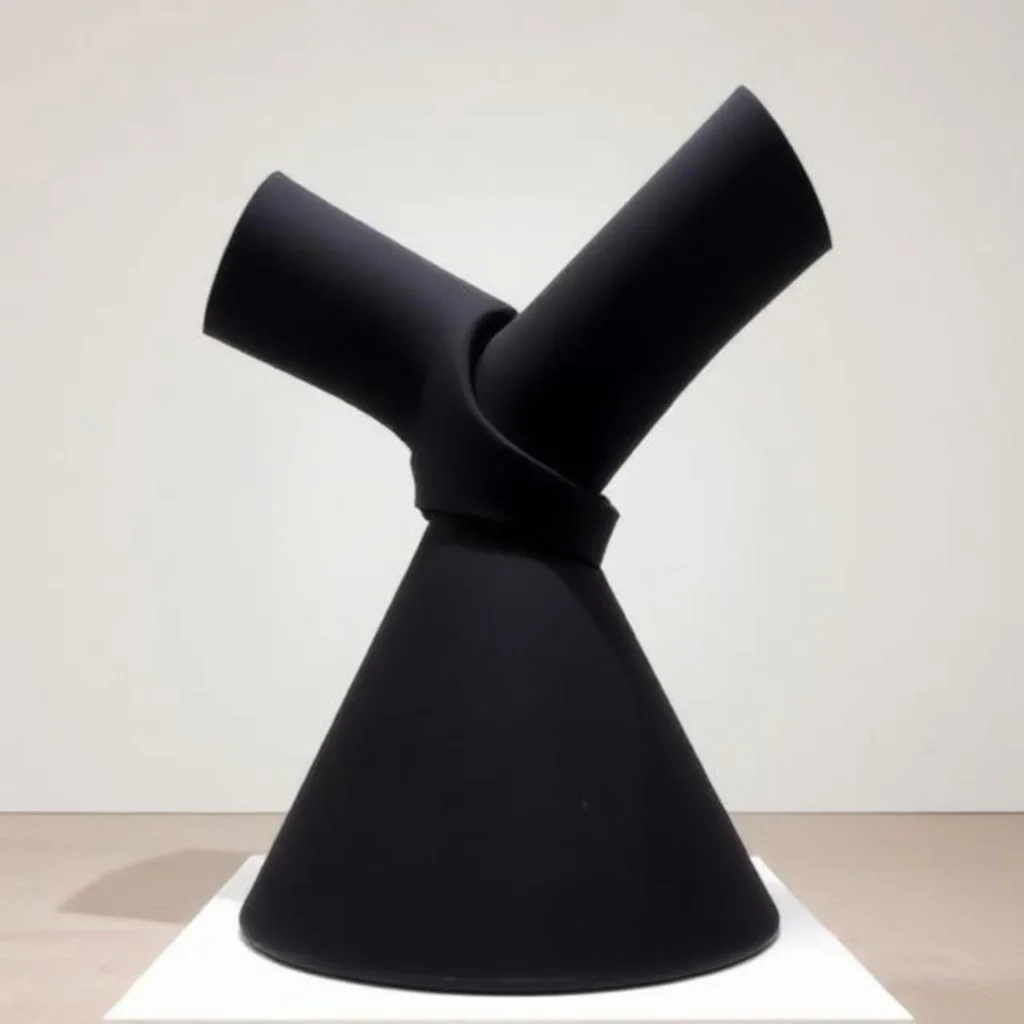
From Social Therapy to the Architecture of Perception
The relationship between ZT Tosha’s OPUS: THE ASSEMBLER and the legacy of Joseph Beuys constitutes neither homage nor repudiation. It represents, rather, a fundamental reorientation—a displacement of the very ground upon which material practice operates. Both artists work with textile. Both understand material as a carrier of meaning. But where Beuys inquired what art might accomplish for the human condition, Tosha interrogates what art can disclose about how that condition is constituted in the first instance.
This is the distinction between therapy and epistemology. Between healing and seeing.
I. The Material Inheritance
When Tosha selects heavy military-grade textile—the cloth of army coats engineered to withstand extreme conditions—he knowingly enters territory mapped by Beuys half a century earlier. Beuys’s employment of felt was never merely formal. The material’s thermal properties became metaphors for insulation, protection, and transformation. Felt retained warmth, and for Beuys, this warmth was simultaneously literal and symbolic: it spoke to art’s capacity to preserve human energy against the cold of political and spiritual crisis.
The felt of Fat Chair (1964) or the iconic Felt Suit (1970) operates within a framework of social sculpture—the expansion of art into everyday life as a transformative, healing force. Beuys maintained that creativity, properly directed, could reshape society. His materials were agents of this reshaping. They carried meaning about warmth, about protection, about the body and its survival.
Tosha’s textile carries no such symbolic cargo. Or rather, it carries it only to refuse it.
II. From Symbol to System
The crucial distinction lies in how each artist conceives of material behavior. For Beuys, felt represented warmth. It stood in for something beyond itself. The material was a signifier, and its power derived from the meanings it could invoke—memory, trauma, healing, the body’s vulnerability and resilience.
For Tosha, the fabric does not represent. It is.
“The fabric does not represent tension — it is tension. The knot does not symbolise memory — it holds it.”
This statement is not rhetoric. It constitutes a philosophical position. In OPUS: THE ASSEMBLER, the textile operates as a physical system, not a symbolic one. Its folds and gathers are not expressive gestures but structural consequences—the visible record of forces acting upon matter. When a knot holds, it does not stand for memory; it performs the same function as memory: retaining, gathering, preventing dissolution.
Where Beuys offers metaphor, Tosha offers mechanism.
III. Two Questions
The divergence can be mapped through the questions each artist poses to their work.
Beuys asks: What can art do?
This is a question of utility, of application. Art becomes a tool for addressing the wounds of history, the alienation of modernity, the spiritual poverty of postwar society. The material’s function is to facilitate this healing—to wrap, to warm, to insulate, to transform. Beuysian material is therapeutic. It acts upon the viewer, upon society, upon the body politic.
Tosha asks: What can art show?
This is a question of revelation, of disclosure. Art becomes an instrument for rendering visible the hidden structures that shape experience itself. The material’s function is to reveal how form emerges from chaos, how order contends with dissolution, how the mind constructs coherence from undifferentiated sensation. Tosha’s material is epistemological. It demonstrates to the viewer how they see.
IV. The Body and the Mind
This difference extends to the role of the human subject. Beuys’s work is profoundly embodied—the felt suit, the fat, the warmth, the insulation—all speak to physical experience, to the body’s vulnerability and its need for protection. The viewer of a Beuys work is addressed as a creature of flesh, subject to cold, to trauma, to the depredations of history.
Tosha’s viewer is addressed differently. The body remains crucial—one must move through space to assemble the work, to experience the shift between Informel collapse and Formel geometry. But this physical engagement serves a cognitive end. The viewer does not come to be warmed or healed. They come to witness the architecture of their own perception.
The “corridor” between Tosha’s installations is not a space of comfort. It is a space of revelation.
V. History and Its Weight
Both artists carry history within their materials. Beuys’s felt bears the memory of wartime experience, of his own survival after his plane crashed in the Crimea, of the Tartars who wrapped him in felt and fat to preserve his life. The material is autobiographical, shamanic, personally redemptive.
Tosha’s military textile carries a different history—not personal but collective, not redemptive but cognitive. The cloth of army coats, stripped of its original function, becomes a neutral ground upon which forces can be made visible. Its history—entangled with conflict, survival, the extremes of human experience—is not denied. But it is not the subject. The subject is what the material does under pressure, not what it means in retrospect.
Where Beuys employs material to process history, Tosha employs material to investigate how history—like all form—emerges from the tension between order and dissolution.
VI. The Viewer’s Role
Perhaps the deepest divergence lies in what each artist demands of the viewer.
Beuys’s social sculpture requires participation, but participation of a particular kind. The viewer is invited into a community of healing, into the expanded field of creativity that Beuys believed could transform society. The work is completed by collective engagement, by the shared project of remaking the world.
Tosha’s viewer participates differently. They are not invited to heal or to transform. They are invited to see—and to see themselves seeing. The installations are constructed so that no single vantage point reveals the whole. Forms shift as one moves; knots appear and disappear; the relationship between collapse and order reveals itself only through traversal. The viewer assembles the work perceptually, carrying images from one space to another, constructing meaning from fragments.
This is not social sculpture. It is phenomenological sculpture. The viewer is not a member of a community but a consciousness encountering the conditions of its own operation.
VII. Two Trajectories
To trace this lineage is to understand a fundamental shift in the project of postwar European sculpture. Beuys, emerging from the trauma of war, sought to make art that could heal—that could restore warmth to a frozen world, that could expand creativity into a principle of social transformation. His materials were carriers of meaning, agents of therapy, instruments of redemption.
Tosha, born in Yugoslavia in 1961, having lived through the dissolution of a state and the reconstruction of identity, poses a different set of questions. Not how to heal, but how to see. Not how to warm, but how to understand the structures that contain and the forces that overflow. His materials do not carry meaning; they enact it. His knots do not symbolize memory; they perform it.
Where Beuys offers us a project of healing, Tosha offers us a diagram of perception. Both are necessary. But they are not the same.
VIII. The Unavoidable Object
Tosha’s statement returns us to the core of the difference:
“I am not interested in art that illustrates ideas. I am interested in art that is the idea, made physical, made present, made unavoidable.”
Beuys’s felt illustrates warmth. Tosha’s fabric is tension.
This is the distance between metaphor and ontology. Between representation and enactment. Between a practice that points toward meaning and a practice that renders meaning unavoidable by rendering it material.
In OPUS: THE ASSEMBLER, the question is never “what does this mean?” but “what is happening here?” The answer is always the same: forces are acting upon matter, and form is emerging from the negotiation. The viewer is not asked to interpret but to witness—and in witnessing, to understand something about how all form, all meaning, all structure comes into being.
This is Tosha’s epistemology. It is not a therapy for the wounds of history. It is an investigation into how history, like everything else, is assembled from the tension between order and the forces that undo it.
IX. Coda: The Weight of Attention
Beuys believed that everyone is an artist. Tosha might agree, but for different reasons. Not because everyone can participate in social sculpture, but because everyone participates in the construction of reality from fragmentary information. The viewer of OPUS: THE ASSEMBLER is not a potential artist; they are an actual assembler. They complete the work not by acting upon it but by moving through it, carrying its images, constructing its meaning.
This is a quieter demand than Beuys’s. It asks not for transformation but for attention. And in that attention, Tosha suggests, lies something more profound than healing: the recognition that what we call reality is always, already, an assembly—a form held together by forces we can only see when they are made material.
The fabric does not represent tension. It is tension. The knot does not symbolize memory. It holds it. And the viewer does not receive meaning. They make it.
This is the architecture of persistence. And it is something Beuys, for all his vision, never quite built.
C.S.Sunday, 15 March 2026